Dressed to Impress: The Hidden Psychology Behind the Colors You Wear
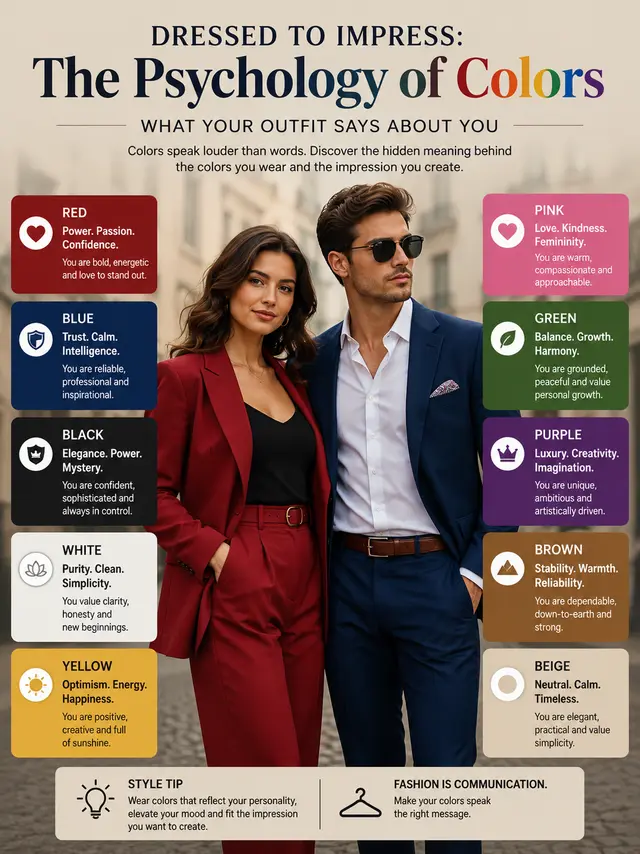
Table of contents
- What Is Color Psychology in Fashion?
- Red: The Color of Power and Passion
- Blue: Calm, Trustworthy, and Intelligent
- Black: Elegant, Powerful, and Mysterious
- White: Clean, Pure, and Minimal
- Pink: Feminine, Soft, and Romantic
- Yellow: Optimistic and Energetic
- Green: Balanced, Natural, and Refreshing
- Purple: Creative and Luxurious
- Brown and Beige: Warm, Reliable, and Timeless
- How to Use Color Psychology in Your Wardrobe
- Dress for the Occasion
- Balance Bold Colors
- Match Colors to Your Personality
- Consider Seasonal Tones
- The Emotional Impact of Colors on Yourself
- Final Thoughts
Fashion is more than just fabric, trends, or personal taste — it is a powerful form of self-expression. Every color you wear communicates emotions, personality traits, confidence levels, and even mood without saying a single word. This fascinating connection between colors and human perception is known as color psychology.
From bold reds to calming blues, the shades in your wardrobe can influence how others perceive you and even how you feel about yourself. Whether you realize it or not, your outfit often speaks before you do.
What Is Color Psychology in Fashion?
Color psychology studies how different colors affect emotions, behaviors, and perceptions. In fashion, colors can influence confidence, attraction, professionalism, creativity, and trustworthiness.
Designers, brands, and stylists often use color psychology strategically to create emotional connections and visual impact. The colors you choose for your outfits can subtly shape first impressions in social, professional, and personal settings.
Understanding color psychology helps you dress more intentionally and confidently.
Red: The Color of Power and Passion
Red is bold, energetic, and attention-grabbing. It symbolizes confidence, passion, strength, and excitement.
What red outfits often communicate:
- Leadership
- Confidence
- Passion
- Bold personality
- High energy
Wearing red can make you stand out instantly, which is why it’s often chosen for important events, parties, or powerful fashion statements.
Best occasions for red:
- Date nights
- Formal events
- Public speaking
- Celebrations
However, too much red can sometimes feel overwhelming, so balancing it with neutral tones creates a more sophisticated look.
Blue: Calm, Trustworthy, and Intelligent
Blue is one of the most universally loved colors because it represents calmness, reliability, and intelligence.
What blue outfits suggest:
- Professionalism
- Trustworthiness
- Stability
- Peacefulness
- Confidence
Navy blue is especially popular in professional settings because it feels authoritative without appearing aggressive.
Light blue creates a softer, more approachable appearance, while darker blues add elegance and maturity.
Perfect for:
- Office wear
- Interviews
- Meetings
- Everyday fashion
Black: Elegant, Powerful, and Mysterious
Black remains one of the most iconic fashion colors of all time. It symbolizes sophistication, luxury, mystery, and confidence.
What black clothing communicates:
- Elegance
- Authority
- Independence
- Strength
- Timeless style
A black outfit can instantly create a polished and slimming appearance. It is also incredibly versatile and suitable for nearly every occasion.
Why people love black fashion:
- Easy to style
- Always trendy
- Creates a refined look
- Works day and night
The famous little black dress remains a perfect example of timeless fashion psychology.
White: Clean, Pure, and Minimal
White represents simplicity, freshness, and purity. It creates a clean and organized impression.
What white outfits symbolize:
- Simplicity
- Freshness
- Peace
- Honesty
- Elegance
White clothing often feels luxurious because of its minimal and sophisticated appearance.
Best styling tip: Pair white pieces with neutral or earthy tones for a soft and modern aesthetic.
Pink: Feminine, Soft, and Romantic
Pink is associated with warmth, compassion, romance, and femininity. Different shades of pink create different emotional effects.
Light pink suggests:
- Softness
- Kindness
- Romance
- Calmness
Bright pink represents:
- Confidence
- Creativity
- Fun personality
- Bold fashion sense
Pink fashion has evolved beyond traditional stereotypes and is now widely embraced in both casual and luxury fashion.
Yellow: Optimistic and Energetic
Yellow is the color of positivity, creativity, and happiness. It naturally attracts attention and creates cheerful energy.
What yellow outfits communicate:
- Optimism
- Joy
- Creativity
- Confidence
- Warm personality
Mustard and pastel yellows are easier to style for everyday fashion, while bright yellow creates a dramatic statement.
Ideal for:
- Summer fashion
- Vacation looks
- Casual daytime outfits
Green: Balanced, Natural, and Refreshing
Green represents nature, growth, balance, and harmony. It creates a refreshing and grounded impression.
Different shades of green symbolize:
- Olive green: sophistication and calmness
- Emerald green: luxury and confidence
- Pastel green: freshness and peace
Green works beautifully in both casual and formal fashion because it feels elegant without being overpowering.
Purple: Creative and Luxurious
Purple has long been associated with royalty, creativity, and luxury.
What purple outfits suggest:
- Imagination
- Confidence
- Artistic personality
- Sophistication
Deep purple shades feel elegant and dramatic, while lavender creates a softer and more romantic vibe.
Brown and Beige: Warm, Reliable, and Timeless
Earthy tones like brown, camel, and beige have become extremely popular in modern fashion due to their calm and luxurious feel.
These colors communicate:
- Stability
- Warmth
- Sophistication
- Natural elegance
Neutral earthy shades are easy to mix and create effortlessly stylish outfits.
How to Use Color Psychology in Your Wardrobe
Dress for the Occasion
Choose colors based on the mood or impression you want to create.
Examples:
- Blue for professionalism
- Red for confidence
- White for elegance
- Black for sophistication
Balance Bold Colors
Bright colors work best when balanced with neutrals like black, white, beige, or grey.
Match Colors to Your Personality
Fashion feels most authentic when your outfit reflects your true personality and comfort.
Consider Seasonal Tones
Warm earthy shades work beautifully in autumn, while pastel and bright colors feel fresh during spring and summer.
The Emotional Impact of Colors on Yourself
Color psychology not only affects how others see you — it also influences your own emotions and mindset.
For example:
- Wearing bright colors may boost mood and energy
- Dark colors may create feelings of power and focus
- Soft neutrals can feel calming and relaxing
This is why choosing the right outfit can sometimes completely change your confidence level for the day.
Final Thoughts
Fashion is a silent language, and color is one of its strongest voices. Every shade in your wardrobe tells a story about your personality, mood, and energy. By understanding color psychology, you can make smarter fashion choices that enhance both your appearance and confidence.
Whether you choose bold reds, calming blues, elegant blacks, or soft neutrals, your outfit becomes more meaningful when you understand the emotions and messages behind the colors you wear.
Because sometimes, the right color can say everything without a single word.

Chirag
Writer at Dial N Fashion, covering Indian ethnic wear, street style and everyday fashion.