Best Ethnic Fashion Styles for Women in India
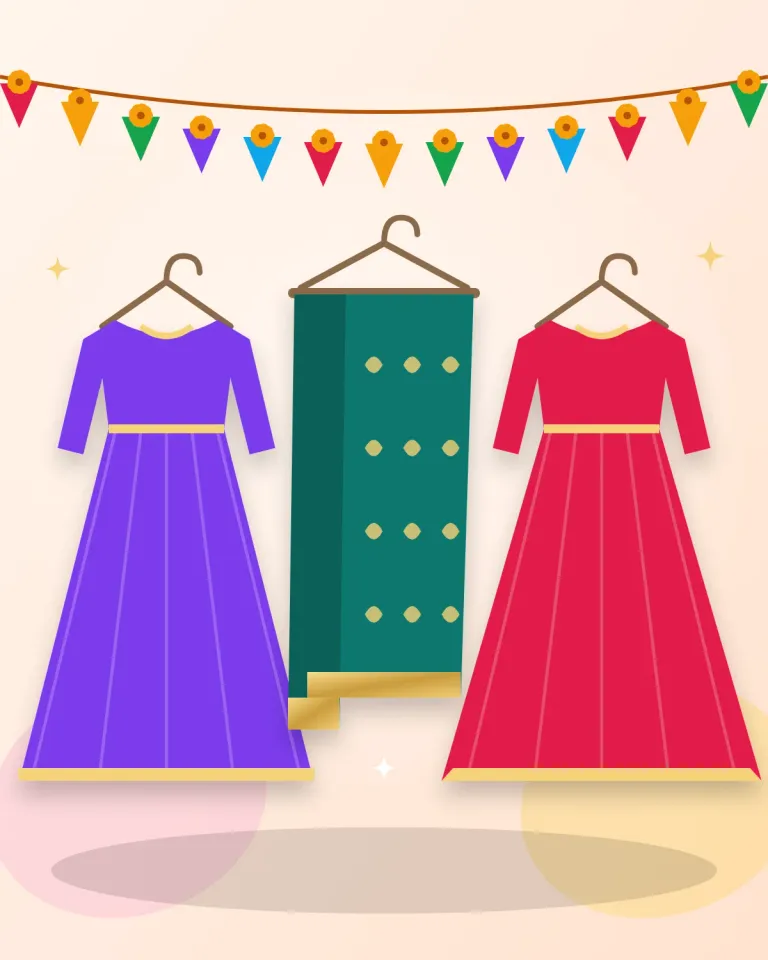
Table of contents
- 1. The saree
- 2. Salwar kameez and kurta sets
- 3. Anarkali suits
- 4. Lehenga choli
- 5. Sharara and gharara sets
- 6. Indo-western fusion
- 7. Regional and handloom styles
- Ethnic fashion styles for every occasion
- Choose fabrics for Indian weather
- How to style ethnic outfits like a pro
- Frequently asked questions
- Which ethnic wear is best for daily office use?
- What should I wear to an Indian wedding as a guest?
- How can I make traditional outfits look modern?
- Final thoughts
India has the richest wardrobe in the world. From six yards of handwoven silk to twirling lehengas and everyday cotton kurtas, Indian ethnic fashion styles cover every occasion — college, office, festivals, weddings and quiet family dinners. This guide walks you through the best ethnic outfits for women in India, when to wear each one, how to choose fabrics for the weather, and how to style them for a fresh, modern look.
1. The saree
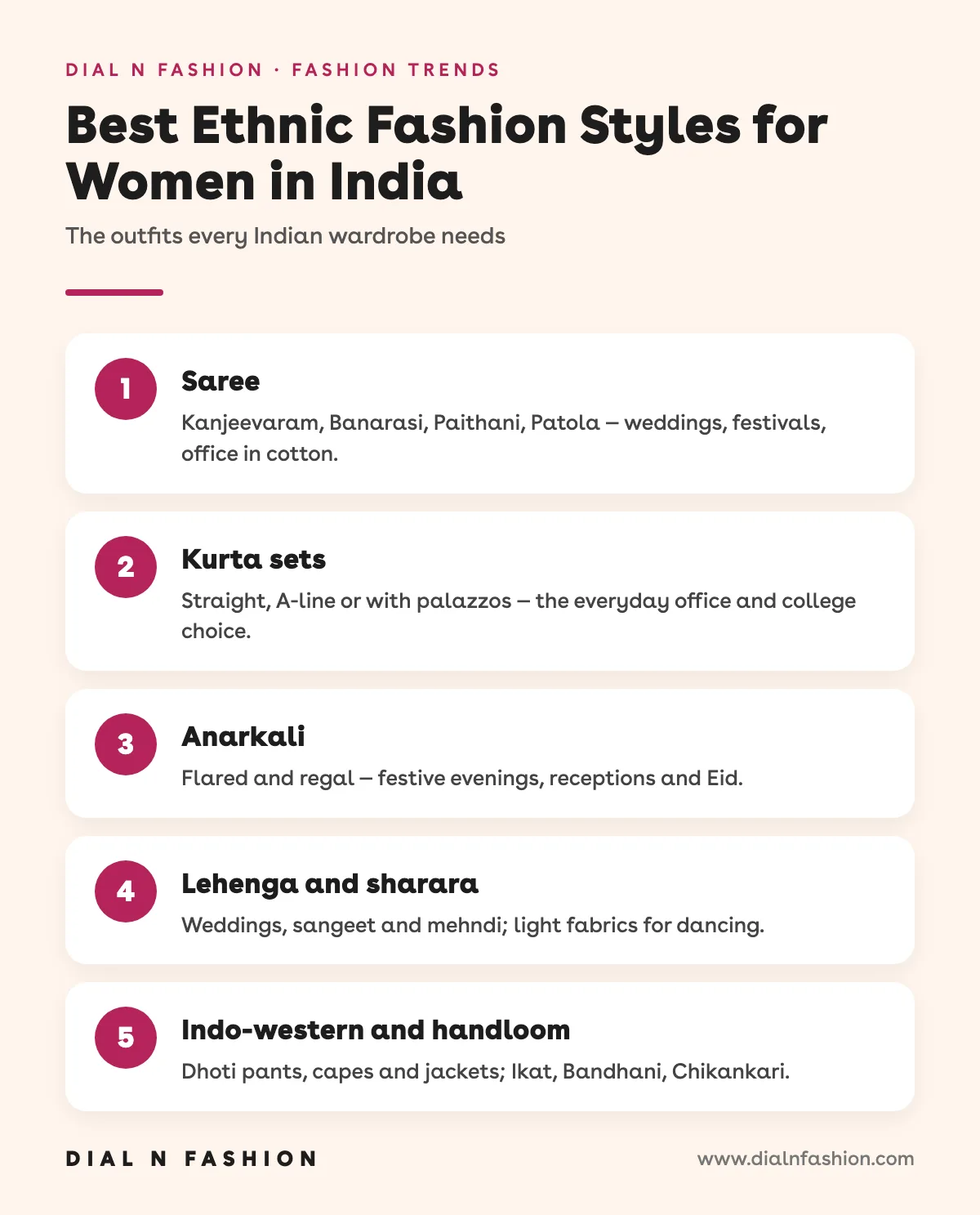
The saree is the queen of Indian ethnic fashion styles. Every region has its own weave and drape — Kanjeevaram from Tamil Nadu, Banarasi from Varanasi, Paithani from Maharashtra, Patola from Gujarat, Jamdani and Tant from Bengal, Kasavu from Kerala. Read more about the history of the sari.
- Best for: weddings, festivals, formal events and, in cotton or linen, the office.
- Style tip: a modern blouse — halter, corset or high neck — makes a classic saree feel new.
Learn eight easy drapes in our guide to saree draping styles.
2. Salwar kameez and kurta sets
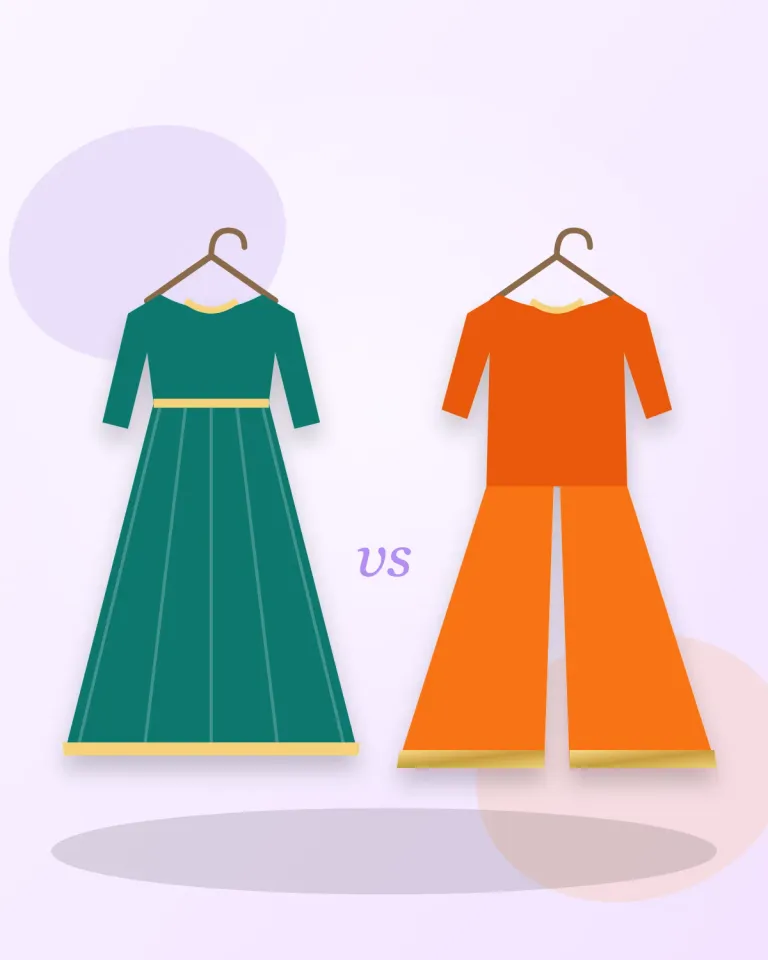
The salwar kameez — a tunic with trousers and a dupatta — is India’s most practical ethnic outfit. Today it comes in many cuts: straight kurta with pants, kurta with palazzos, A-line kurtas and short kurtis with cigarette pants.
- Best for: office, college, travel and family gatherings.
- Style tip: a solid kurta set with a printed dupatta is the easiest way to look polished every day.
3. Anarkali suits
Inspired by Mughal court fashion, the Anarkali is a long, flared kurta fitted at the bodice. Floor-length Anarkalis look regal at weddings, while knee-length cotton ones work for festivals and puja.
- Best for: festive evenings, receptions and Eid.
- Style tip: keep jewellery to statement earrings so the flare is the hero.
4. Lehenga choli
The lehenga — a flared skirt with a fitted blouse and dupatta — is the classic bridal and wedding-guest outfit. Lighter lehengas in cotton, georgette and chanderi are now popular for sangeet, mehndi and Navratri.
- Best for: weddings, sangeet and big celebrations.
- Style tip: try a lehenga with a shirt-style blouse or a cape for a contemporary twist.
Planning the wedding functions? See our mehndi outfit ideas and haldi ceremony outfit guides.
5. Sharara and gharara sets
Wide, flared pants paired with a short kurti and dupatta. The sharara flares from the waist; the gharara is fitted to the knee and flares below it. Both are comfortable, dance-friendly and very photogenic.
- Best for: sangeet, mehndi, Eid and festive parties.
6. Indo-western fusion
Fusion outfits mix Indian fabrics and silhouettes with western cuts: dhoti pants with a crop top, a kurta with jeans, a saree gown, a cape over a lehenga skirt, or a jacket over a kurta.
- Best for: cocktail parties, college fests and festive office days.
- Style tip: pick one Indian element and one western element — not too many of each.
7. Regional and handloom styles
India’s handlooms are a treasure — Ikat, Bandhani, Ajrakh, Kalamkari, Chikankari, Phulkari and Kantha. Wearing them supports artisans and gives your wardrobe a unique, timeless touch. The Indian textile industry has one of the longest histories in the world.
Ethnic fashion styles for every occasion
| Occasion | Best ethnic fashion styles | Fabrics |
|---|---|---|
| Office | Straight kurta set, cotton saree, A-line kurta with pants | Cotton, linen, khadi, chanderi |
| College and casual | Short kurti with jeans, kurta with palazzos, co-ord sets | Cotton, rayon, mul |
| Festivals and puja | Anarkali, silk saree, sharara set | Silk blends, chanderi, georgette |
| Wedding guest | Lehenga, silk saree, embroidered Anarkali | Silk, georgette, net, velvet (winter) |
| Bride | Bridal lehenga or heritage silk saree | Banarasi, Kanjeevaram, raw silk, velvet |
Choose fabrics for Indian weather
- Summer: cotton, linen, mul and chanderi breathe best. Pick light colours.
- Monsoon: rayon, crepe and synthetic blends dry quickly; avoid pure silk and long hems.
- Winter: silk, velvet, wool-blend kurtas and pashmina shawls keep you warm and festive.
Our essential fabrics guide explains each fabric in more detail.
How to style ethnic outfits like a pro
- Drape the dupatta well: one-shoulder pleats look neat; a cape drape looks festive. See our dupatta styles.
- Match jewellery to the neckline: chokers for open necks, statement earrings for high necks — our guide to jewellery for your neckline has a full chart.
- Choose the right footwear: juttis and kolhapuris for day, block heels for evenings.
- Balance the look: heavy embroidery with minimal jewellery, simple outfits with bold accessories.
- Get the fit right: a tailor can make a ready-made kurta look custom-made.
Frequently asked questions
Which ethnic wear is best for daily office use?
A straight or A-line cotton kurta with pants or palazzos is the most comfortable and professional choice. Cotton and linen sarees are elegant alternatives for formal days.
What should I wear to an Indian wedding as a guest?
A silk saree, a light lehenga or an embroidered Anarkali works for most ceremonies. Avoid all-white and all-black for traditional functions, and check whether the family has a colour theme.
How can I make traditional outfits look modern?
Change one element: a contemporary blouse with a classic saree, a belt over a dupatta, sneakers with a cotton kurta, or a jacket over a lehenga.
Final thoughts
From the timeless saree to modern Indo-western sets, the best ethnic fashion styles for women in India are the ones that suit your occasion, the weather and your personality. Build a small wardrobe of a few kurta sets, one or two good sarees, an Anarkali and a festive lehenga or sharara, and you will be ready for every celebration of the year. For festival-by-festival ideas, read our festive fashion guide.

Chirag
Writer at Dial N Fashion, covering Indian ethnic wear, street style and everyday fashion.